


How to Resolve Large-Scale Pagination Issues


Tips to Resolve Large-Scale Pagination Issues
Large-scale pagination issues can be difficult to resolve, but there are a few techniques that can help. Here are a few tips:
1. Use Pagination Software: Pagination software can help to automate the pagination process and make it easier to manage large-scale pagination issues.
2. Use Page Breaks: Page breaks can help to ensure that pages are evenly filled and avoid large white spaces on the page.
3. Use Pagination Headers: Pagination headers can help to indicate to the user that they are reading a paginated list.
4. Use Pagination Navigation: Pagination navigation can help the user to easily navigate between pages in a paginated list.
5. Use Pagination Indicators: Pagination indicators can help the user to quickly identify which page they are on in a paginated list.
By following these tips, you can help to resolve large-scale pagination issues and create a more user-friendly and manageable paginated list. Pagination is a process which divides content across a series of pages. It is a common and widely used technique for websites to use pagination to divide lists of articles or products into a digestible format in SEO. Pagination can help to improve the usability of long lists by making them easier to navigate.
However, large-scale pagination issues can be difficult to manage and resolve. By following the tips listed above, you can help to overcome these issues and create a well-structured paginated list. Pagination is a process which divides content across a series of pages. It is widely used technique for websites to use pagination to divide lists of articles or products into digestible format. Pagination can improve usability of long lists by making them easier to navigate, but it does come with several issues that need resolutions.
Why to Resolve Large-Scale Pagination Issues?
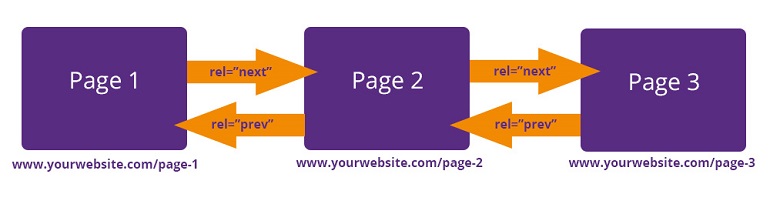
Pagination is a process which divides content across a series of pages. It is a common and widely used technique for eCommerce websites to use pagination to divide lists of articles or products into a digestible format. Paginating data can be useful if the amount of data is large, as it reduces demands on server resources, makes it possible for users to navigate results incrementally, and enables search engines to index parts of the data set separately. Paginated pages may also refer to as “parts” where each part links to a subsequent page by way of next links, previous links, or both. In many cases pagination is used in place of sending all current results at one time due to limitations with transmission speed over some media, such as slow dial-up modem speeds.
Pagination is also used to improve the usability and accessibility of a website, as paginated archives allow users to jump quickly between sections of interest and reduce the amount of clicking required if all content were presented on a single page. However, there are drawbacks to pagination: Paginated pages may contain less ranking strength than their non-paginated counterpart. Pagination can lead to lower overall rankings as sites with Pagination tended to have significantly fewer inbound links than those without Pagination according to research completed using data from 2003 through 2010.
Many websites such as Wikipedia use linking schemes such as zero (0), previous or next instead of numerical values for articles or products which relate each item together in a series. Pagination can also cause duplicate content issues if the Paginated pages are not canonicalized. Pagination is a technique used to break up content into multiple pages. Pagination is often used on websites to break up lists of articles or products into a digestible format. Paginating data can be useful if the amount of data is large, as it reduces demands on server resources, makes it possible for users to navigate results incrementally, and enables search engines to index parts of the data set separately. Paginated pages may also refer to as “parts” where each part links to a subsequent page by way of next links, previous links, or both.
Conclusion
In many cases pagination is used in place of sending all current results at one time due to limitations with transmission speed over some media, such as slow dial-up modem speeds. Pagination is also used to improve the usability and accessibility of a website, as paginated archives allow users to jump quickly between sections of interest and reduce the amount of clicking required if all content were presented on a single page. However, there are drawbacks to pagination: Paginated pages may contain less ranking strength than their non-paginated counterpart.
Recent Posts


